
As the European Union prepares to implement its Packaging & Packaging Waste Regulation (PPWR) on August 12, 2026, U.S. exporters must understand PPWR compliance requirements for pallets, reusable systems, labeling, and digital tracking. Manufacturers and 3PLs shipping palletized goods to the EU are seeking clarity on how the rules affect export operations.
This guide outlines what PPWR compliance means for U.S. shippers, including EU pallet standards, NWPCA insights, EPAL requirements, ISPM-15 considerations, and key 2026 deadlines. It is designed as a procurement-ready Q&A, helping exporters avoid costly repalletization, delays at EU entry points, and supply chain disruption. All information is supported by reputable sources, including EPAL, NWPCA, Virginia Tech CULD, Pallet Enterprise reporting, ISPM-15 Heat Treatment Service and IPPC standards.
1. What is the PPWR Regulation?
The PPWR (Packaging & Packaging Waste Regulation) is the EU’s new, legally binding regulation designed to reduce packaging waste, standardize reusable systems, and increase recyclability across all packaging types, including pallets.
Source: European Commission PPWR proposal overview.
2. When does the PPWR take effect?
Most provisions, including those that affect pallets, apply August 12, 2026, with reuse targets and labeling mandates phasing in through 2030–2040.
3. Are pallets considered “packaging” under the PPWR?
Yes. Pallets fall under transport packaging and are governed by provisions for reusability, recyclability, labeling, digital tracking, and system participation.
4. Does the PPWR apply to U.S. exporters?
Yes. Any company that places packaged goods on the EU market must comply, even if located outside Europe.
5. What are the reuse targets for pallets?
The PPWR introduces mandatory reuse targets for transport packaging:
- 40% reusable by 2030
- 70% reusable by 2040
6. What is a “reusable system,” and what does it mean for pallet buyers?
To qualify as reusable, pallets must be durable, repairable, trackable (QR/RFID), and part of an approved return, inspection, repair, and redistribution loop.
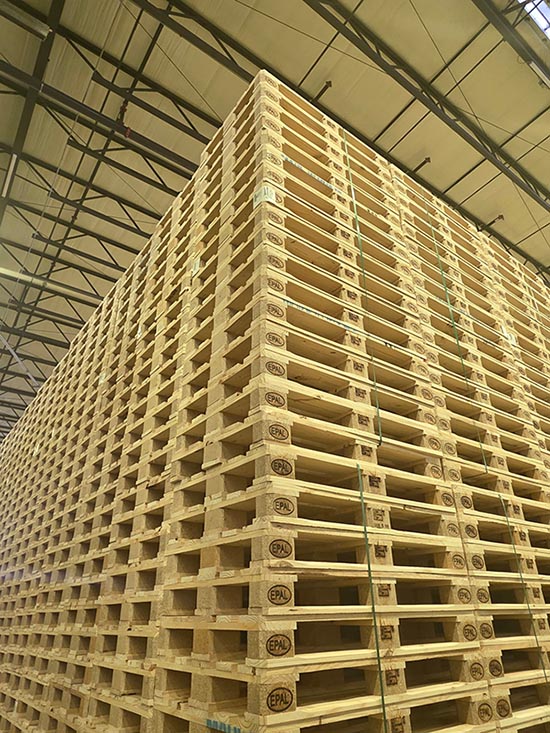
For most exports, this points toward EU-standard block pallets such as
EPAL 1, EPAL 3, CP1, CP3, and CP9.
7. Can stringer pallets still be used for export pallets?
Technically yes, but practically very limited. EU importers, especially in pharma, food, chemicals, and automation, favor block pallet formats that fit reuse systems. Stringer pallets are typically classed as expendable.
8. How will the PPWR impact single-use pallets?
Single-use pallets will face stricter recyclability rules, cannot count toward reuse targets, and may require additional documentation.
9. Will shipments on stringer pallets or non-reusable pallets be accepted at EU ports of entry?
Yes. Thanks to NWPCA advocacy, pallets entering or leaving the EU are exempt from PPWR reuse system tracking requirements at customs. The NWPCA successfully secured language in the final regulation limiting reuse requirements to packaging used “within the territory of the Union,” meaning imported pallets are exempt from the regulation’s reuse tracking obligations during international transit.
EU customs will continue to accept ISPM-15 compliant wood packaging at the border, including:
- U.S. stringer pallets
- Expendable/single-use pallets
- Any non-reusable pallet that meets heat-treatment and marking requirements
However, acceptance at the border does not guarantee acceptance in the EU supply chain.
According to the NWPCA, once these unit loads pass through customs, most receivers will require repalletization onto a reusable, PPWR-compliant pallet, such as an EPAL Euro Pallet or Chemical Pallets. This is because stringer and single-use pallets:
- Do not meet PPWR reuse system requirements
- Are not compatible with EU pallet pooling networks
- May not run reliably in EU automated systems
- Are often rejected by pharma, chemical, and food facilities
As a result, U.S. exporters should expect:
- Repalletization fees
- Delays at cross-docking facilities or DCs
- Higher handling cost and damage risk
- Possible customer-mandated pallet specifications in 2026 and beyond
10. What new labeling or tracking will pallets require?
Beginning around 2027, reusable transport packaging must include:
- A standardized EU reuse label
- A digital data carrier (QR or RFID)
- Information on repairability and rotations
11. Do recycled-content rules apply to plastic pallets?
Yes. Plastic pallets must contain:
- 30% PCR content by 2030
- 35% PCR content by 2035
12. What operational changes should procurement teams expect?
Exporters must standardize export pallet formats, implement digital tracking, maintain reuse documentation, provide recyclability data, and update SOPs for 2026.
Pharma-specific note: The Netherlands, Belgium, and Denmark prefer clean-room compatible, automation-ready EPAL/CP pallets due to consistent tolerances.
13. What Does PPWR Compliance Mean for US Exporters?
U.S. exporters who fail to meet PPWR compliance risk several operational and financial consequences. Non-compliant pallets and packaging may be refused at EU borders, triggering delays and repalletization costs. Companies could also face administrative fines, mandatory digital record-keeping, and stricter documentation requirements. Additionally, many EU customers will enforce their own pallet and packaging specifications, meaning exporters must proactively adopt EPAL or CP pallet formats and maintain accurate tracking and reuse records to stay compliant and avoid supply chain disruptions.
14. What about pallet wrap, straps, cornerboards, and dunnage?
All fall under PPWR’s transport packaging scope. The EU is still debating the reuse vs recyclable single-use acceptance.
15. Does PPWR change ISPM-15 requirements?
No. ISPM-15 remains unchanged. Wood packaging entering the EU must be heat-treated and stamped.
16. Which pallet formats are most widely accepted in the EU today?
The leading formats are EPAL 1, EPAL 3, CP1, CP3, and CP9, widely used across pharma, chemical, manufacturing, and retail sectors.
17. Should U.S. exporters begin switching to EPAL or CP pallets now?
Yes, especially if shipping pharmaceuticals, chemicals, food ingredients, industrial goods, or any products destined for Germany, the Netherlands, Belgium, Denmark, or France.
18. What should procurement teams do in 2025–2026?
- Audit export pallet specs
- Confirm EU customer requirements
- Select a U.S. manufacturer producing EPAL- Euro Pallets/CP pallets
- Plan a reuse-system strategy
- Prepare for digital labeling and tracking
- Update contracts and SOPs
19. Where can I buy newly manufactured EPAL pallets in the United States?
Very few U.S. manufacturers are certified to produce authentic, newly manufactured EPAL pallets that comply with EU pooling and automation standards. Hinton Lumber is one of only two certified EPAL manufacturers in the U.S., producing EPAL 1, EPAL 3, and CP-style export block pallets. To meet growing global compliance demands for Euro pallets, Hinton Lumber Products has ramped up production. Its automated facilities in Texas and Alabama can manufacture up to 26,000 EPAL and CP pallets per day, supporting clean-room, pharmaceutical, chemical, and industrial export applications in alignment with PPWR standards.
The Bottom Line
The EU’s PPWR represents the most significant change to packaging regulations in 30 years. While the NWPCA successfully secured an exemption for imported pallets at customs, the reality is that most EU customers (receivers) will require PPWR-compliant reusable pallets for internal distribution.
U.S. exporters who proactively switch to EPAL/CP formats now will avoid costly repalletization fees, delays, and customer dissatisfaction. Don’t wait until August 2026—start your compliance planning today.
Related Resources:
- The Hidden Costs of Non-Compliance with EU’s PPWR
- EPAL 1 & EPAL 3- Pallets Specifications & Uses
- Learn how Hinton Lumber ramps up EPAL production for PPWR compliance
Need Help with PPWR Compliant Pallets?
Contact us today to discuss your EU export pallet requirements and ensure your shipments are ready for August 2026 compliance deadlines.