
Executive Summary: Industrial-grade Southern Yellow Pine lumber used in pallet manufacturing is experiencing rapid price volatility across U.S. markets. Since early 2026, pallet-grade #3 and #4 lumber prices have risen sharply in many regions. The largest spikes are in #4 grade lumber, which manufacturers use widely in pallet parts.
At the same time, rising global energy prices and limited trucking capacity are increasing transportation costs. This creates a compounding effect for pallet buyers.
For procurement teams managing pallet supply, the current market shows a key reality. When industrial lumber supply tightens and freight costs rise, pallet prices and lead times can change fast. Understanding the structural drivers behind these shifts helps buyers plan more effectively and avoid unexpected disruptions.
Key Market Takeaways
- Industrial-grade #4 Southern Yellow Pine, used in pallet parts, has risen over 20% since February in some regions.
- Since the start of 2026, #4 pallet lumber prices have surged nearly 40% in western Southern Pine markets.
- Rising oil prices tied to geopolitical instability are increasing freight costs and tightening truck capacity.
- For pallet buyers, the result is a double cost pressure: higher lumber prices and higher transportation costs.
Why Pallet Lumber Prices and Freight Costs Are Rising in 2026
Just a few weeks ago, we published a guide on industrial-grade Southern Yellow Pine pallet pricing. It explains why pallet lumber (#3 and #4 grade) was tightening in the Southeastern lumber market. It also explained what that meant for pallet buyers.
Since then, the industrial lumber market has moved even faster.
Industrial lumber markets have shifted dramatically in just weeks. In some regions, #4 pallet lumber has jumped more than 20% since February and nearly 40% since the start of the year.
This week’s lumber market update and pricing data from Random Lengths (Fastmarkets RISI) show gains in high-grade framing lumber. But for pallet users, low-grade lumber stood out, with strong activity. Pricing for #4 Southern Pine was especially firm in several regions.
At the same time, a new global factor has entered the equation: energy swings linked to the wider war involving Iran. This is pushing oil prices to rise higher and raising freight uncertainty across supply chains.
For pallet buyers, the message is clear: lumber costs and transportation costs are moving in the same direction.
Why #3 and #4 Southern Yellow Pine Are Driving Pallet Lumber Prices
While broader lumber benchmarks often dominate headlines, pallet buyers know that the real story lies in industrial grades.
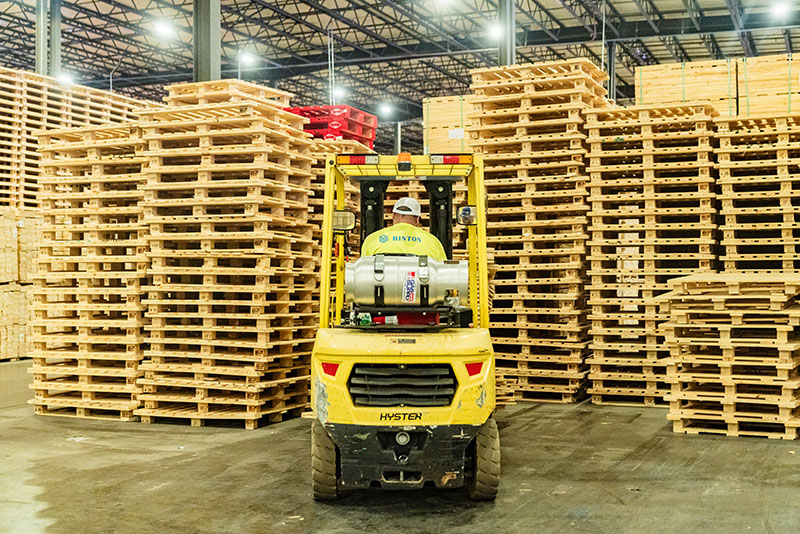
Lower-grade lumber plays a key role in pallet production across North America. Pallet makers widely use #3 and #4 Southern Yellow Pine for pallet parts. These components go into standard pallets, such as block pallets used in automated warehouses. They also support stringer pallets used in traditional pallet supply chains. Exporters also use them in heat-treated pallets made for export. These grades make up a smaller share of mill output. They are very sensitive to changes in production, supply disruptions, and restocking cycles.
According to the latest market commentary, low-grade lumber was once again in the spotlight this week, posting some of the largest gains across species and regions.
Mills have longer order files. Buyers returned to cover near-term needs. In some areas, #4 Southern Pine prices rose sharply. This was most clear in the western Southern Pine region.
Why Industrial Lumber Supply Is Tightening for Pallet Manufacturing
Structural reasons explain this. Modern sawmills across the Southeast have invested heavily in scanning and optimization technology. This advanced technology is designed to maximize the recovery of higher-grade lumber.
This shift has helped mills work more efficiently. But it has also reduced lumber supplies for pallet manufacturing. This is most clear in lower-grade material like #3 and #4 Southern Pine.
That’s great for mill efficiency, but it also means there is less natural “downfall” into #3 and #4 grades than in the past.
When mills reduce production or extend order files, the impact on industrial lumber is disproportionate:
- Overall output declines
- Lower grades shrink fastest
- Availability tightens quickly
- Price movement accelerates
In other words, even a small shift in supply can cause big price swings in the lumber grades used for pallets.
How Rising Fuel Prices Are Increasing Freight Costs for Lumber and Pallets
Just as industrial-grade lumber was tightening, another variable entered the market: energy prices.
The ongoing war involving Iran has pushed oil prices sharply higher and created uncertainty around global energy supply routes. Analysts are already warning about possible disruptions in the Middle East.
These disruptions could affect infrastructure and shipping lanes.
They have already pushed crude oil prices above $100 a barrel.
When oil prices move, transportation costs follow.
That matters because lumber and pallets are heavy, bulky products that rely almost entirely on truck transportation.
Even before the current geopolitical tension, lumber market commentary had already highlighted truck shortages and deteriorating freight availability across several regions.
Higher diesel prices translate directly into:
- Fuel surcharges
- Higher linehaul rates
- Reduced trucking capacity
- Longer delivery times
For pallet buyers, this creates a compounding effect: higher lumber costs plus higher delivery costs.
Why Rising Pallet Lumber Prices Matter for Pallet Buyers
The combination of industrial-grade lumber volatility and freight pressure can create rapid changes in pallet pricing.
When #4 grade becomes scarce, buyers often shift demand upward to #3 grade lumber. That substitution effect increases competition for the remaining supply and can accelerate price increases.
At the same time, rising transportation costs increase the delivered price of both lumber and finished pallets.
The result is a market where availability, lead times, and freight costs can matter just as much as raw lumber prices.
For procurement teams managing pallet supply, the key takeaway is simple. Volatility can arrive fast when supply and logistics tighten at the same time.
How Pallet Suppliers Manage Lumber Price Volatility
Market cycles like this are nothing new to the pallet industry.
What matters most during periods of volatility is the strength and flexibility of your supplier network.
Pallet suppliers should understand pallet lumber sourcing and standardized pallet production. This includes making EPAL pallets, CP pallets, block pallets, and stringer pallets for global supply chains.
At Hinton Lumber Products, we’ve built our operations specifically to navigate markets like this.
With large-scale automated pallet manufacturing, we produce pallets efficiently.
We source lumber from many suppliers, both domestic and overseas. We also maintain long-term relationships with mills. Every day, we work to secure supply and keep production steady for customers.
For companies shipping internationally, pallet specifications can matter just as much as lumber availability. Many exporters use standard pallet systems like EPAL and CP pallets. These pallets are common in European and global supply chains.
As one of the only USA manufacturers of EPAL pallets, Hinton Lumber Products helps customers keep a steady pallet supply. Even when industrial lumber markets tighten.
During periods of lumber volatility, working with skilled manufacturers can reduce risk and keep supply steady.
Our scale and experience allow us to help customers:
- Manage pallet availability during lumber shortages
- Navigate shifting freight costs
- Evaluate pallet specifications for efficiency
- Plan procurement strategies that reduce risk
Companies searching for “pallets near me” often discover that working with large-scale manufacturers and national pallet suppliers provides greater supply stability during volatile lumber markets.
While no supplier can control global energy markets or lumber cycles, the right partner can help steady supply.
This support matters most when markets become unpredictable.
Pallet Lumber Market Outlook for 2026
If the last few weeks are any guide, pallet buyers should expect continued ups and downs this spring. Lumber and shipping markets may stay unstable.
Industrial-grade lumber will likely stay sensitive to supply disruptions. Fuel prices and truck availability will still affect delivered costs.
For pallet buyers, the takeaway is simple: industrial lumber markets can change fast when supply and logistics tighten together.
Staying informed and working with experienced suppliers who understand these cycles has never been more important.If you want to better understand how lumber volatility could impact your pallet supply, the team at Hinton Lumber Products is always available to discuss current market conditions and help plan procurement strategies that reduce risk.